
There are so many opportunities that I can get here that I am not able to get anywhere else.
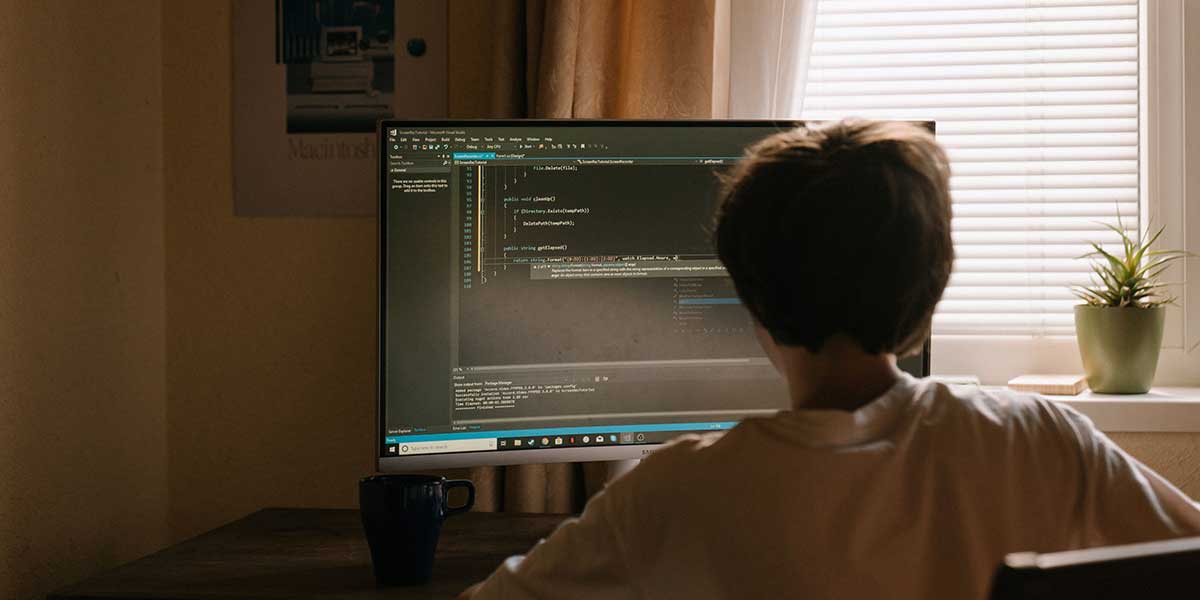
The Peddie School Computer Science Club recognizes that curiosity can strike at any point, even during summer break.
That’s why the club hosts PeddieHacks, a virtual student-run summer hackathon providing students of all experience levels a space to explore new technologies, collaborate with others and create impactful projects. Now in its sixth year, the hackathon has expanded outreach to student innovators globally and introduced a diverse range of new project ideas.
Over 250 high school and college students participated in this year’s PeddieHacks virtual event focused on topics within the health and athletics fields held on August 14-16. Teams spent 48 hours working together to compete for over $800 worth of cash prizes and perks provided by the event’s sponsors, including digital security provider NordVPN and Art of Problem Solving, an organization providing educational resources for high-performing students.
“We hope that these resources, the experience of presenting to a live judging panel and receiving feedback encourage our competitors to continue pursuing computer science after the hackathon ends,” said Olivia Timmermann ’27, lead organizer for PeddieHacks.
Some of the standout projects from the event included:
Sona — Judges’ Prize: Inspired by a team member’s experience with his grandmother’s dementia, Sona is a voice-based, browser-run early warning system designed to identify potential early signs of dementia by analyzing changes in speech and other acoustic and linguistic patterns.
MOVO — College Track Prize: MOVO, a social fitness app, gamifies exercise where users’ real-world movement helps raise and evolve a virtual companion with an added social component to promote accountability rather than competition.
AdaptFit — High School Track Prize: Addressing the need for personalized fitness plans, AdaptFit considers a user’s individual abilities, sensitive body areas, equipment and fitness goals to recommend appropriate exercises and alternatives through accessible camera-based movement guidance, high-contrast settings, larger text and haptic feedback.
The club discovered the allowance for AI during this year’s event, a reversal of last year’s ban, led to greater idea variation and creative thinking within projects.
“Instead of replacing original ideas, AI gave teams the tools to turn ambitious concepts into working projects within the 48-hour time limit,” said Kasey Lee ’27, one of the virtual event’s co-logistics team leaders. “This allowed participants to focus more on their vision, experimentation and problem-solving, resulting in projects that felt more creative, personal and ambitious than ever.”

Learn more about the PeddieHacks event here.